OBSERVATION TOOL - PART II
Coaches were able to increase their daily observations from 1 to 2-3, helping the organization support more schools without hiring additional staff.
Coaches spent 20% less time on each observation and could rely on the tool in real classrooms
Led the end-to-end UX and interaction design of the new observation tool
Designed offline-first flows so the tool worked reliably anywhere
Ran usability testing with users and improved the design based on the feedback
Worked closely with engineers to navigate technical limits and ensure smooth implementation
Built the system in a way that could easily support future features (AI insights, principal tools, etc.)
Once the decision was made to replace the outdated Teach Tool, the next challenge was to design a fast, simple, mobile-first observation experience that coaches could use inside real classrooms, often with little time, unstable internet, and multiple contextual distractions.
This case study focuses on the UX design of FICO, a lightweight, offline-first, LP-integrated observation tool that increased observation throughput, standardized data, and enabled future AI-driven improvements.
Through research with the coaches we shaped the experiences with following considerations:
Speed: Make in-class observations fast and low-effort.
Lesson Integration: Automatically align indicators with the lesson being taught.
Flexibility: Allow program teams to update or customize indicators without redesigning the form.
Offline First: Support full functionality without internet.
Clarity & Focus: Reduce cognitive load through structured, minimal design.
Instead of a smaller, paginated form, I designed a single long scroll, intentionally based on feedback from coaches who needed to move quickly through the form.
This enabled:
Peripheral awareness while observing
Natural one-handed use
Less context-switching between screens
Continuous flow rather than page-by-page friction
Selecting the Lesson at the beginning
This unlocked:
Lesson specific indicators
Contextualized criteria
More accurate evaluation of teaching practice
This single decision increased Lesson relevance + usage across classrooms.
I designed the system so the form could accept any indicator definition including different subjects, grades, lessons. This flexibility meant the tool would stay future-proof and scalable.
The tool was designed to work seamlessly even in low-connectivity classrooms:
Everything stored locally
Zero blockers due to network
Automatic background sync when online
Clear “unsynced” indicators and safe states
This made FICO reliable in real field environments.
Before AI feedback generation was introduced in Case Study 3, I designed:
Clean sections for strengths + areas of growth
Simple, quick text entry
Standardized structure across all coaches
This was the first time feedback became consistently documented for future integration within ecosystem and analysis.
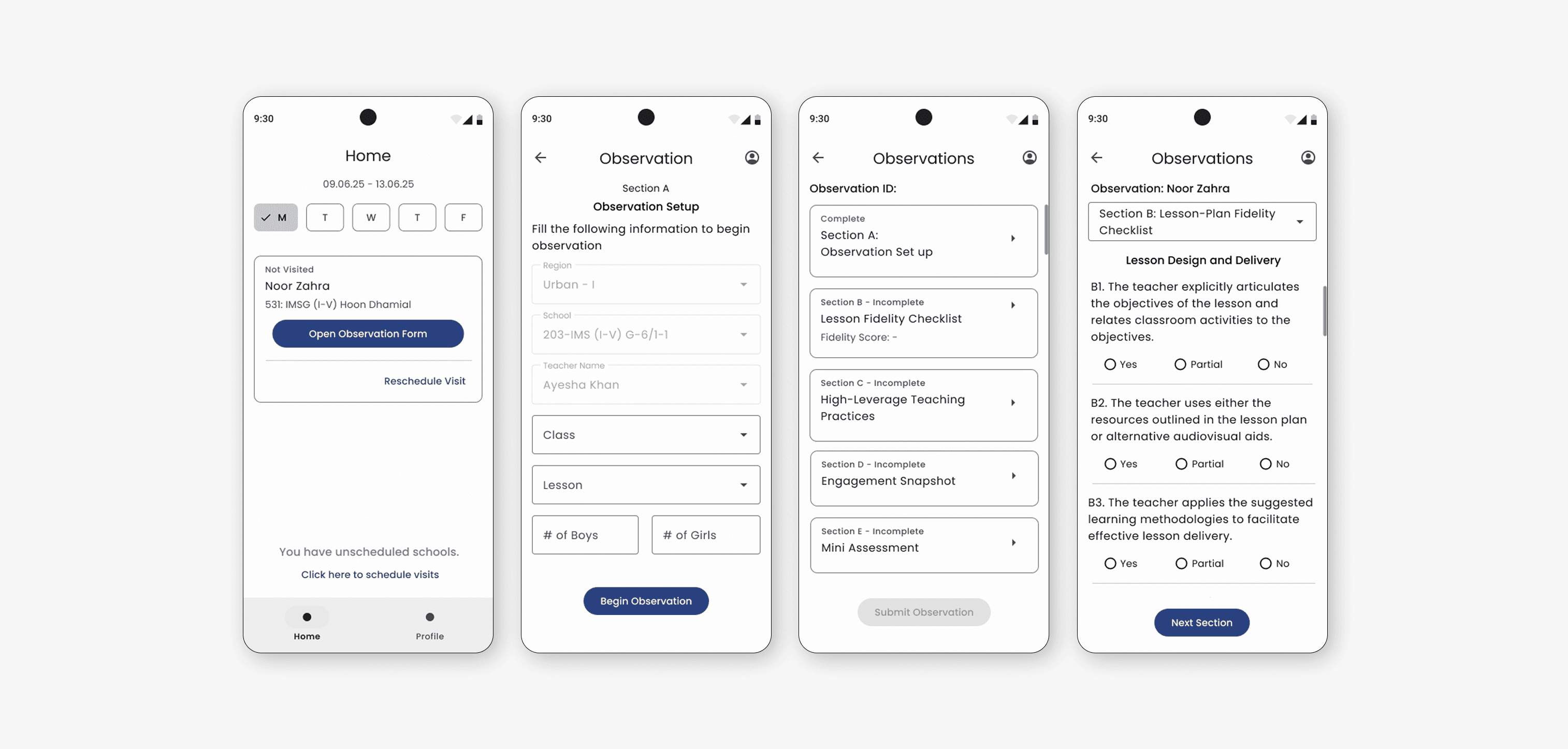
Part of the flow.
FICO ran in parallel with the Teach Tool during testing
After validation, it fully replaced the Teach Tool
20% reduction in observation time
Coaches increased throughput from 1 → 2-3 observations/day
Observations became lesson-aligned for the first time
Flexible indicators improved data consistency
Offline-first behavior enabled use in all classrooms
Feedback became structured + documented
Data became analyzable across 400+ schools
Foundation built for AI feedback + principal observations